
Confirmed Plenary Speakers:
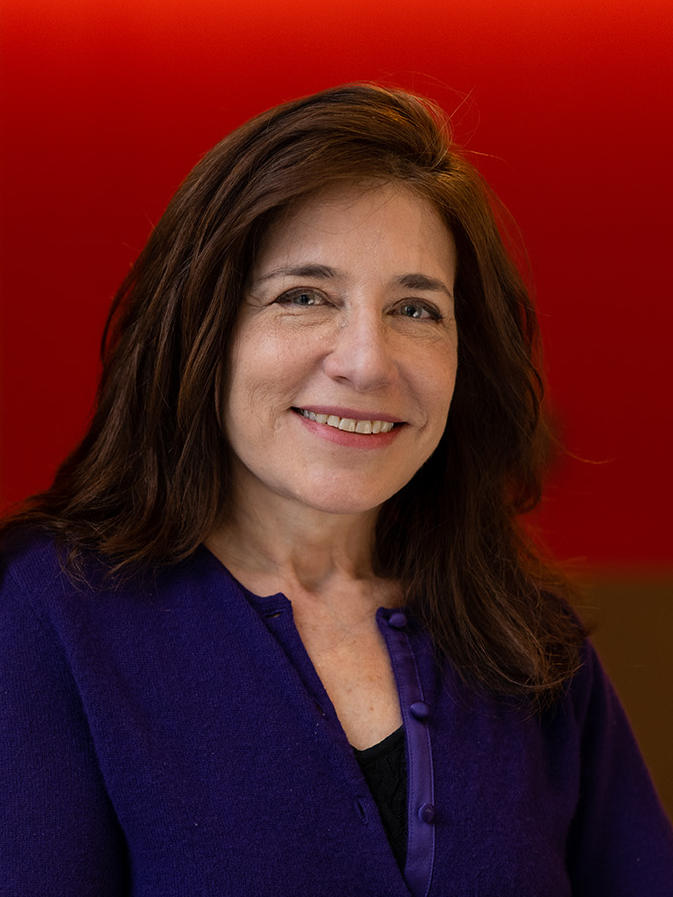
Prof. Adele Goldberg (University of Princeton)
https://psychology.princeton.edu/people/adele-goldberg
Adele Goldberg is the M. Taylor Pyne Professor of Psychology at Princeton University. She is one of the leading figures in Construction Grammar and cognitive-functional approaches to language. Her research investigates the nature of argument structure constructions, the relationship between lexis and grammar, and the mechanisms by which linguistic knowledge emerges from language use. Integrating theoretical analysis with experimental and corpus-based methodologies, her work has significantly advanced our understanding of how general cognitive processes shape grammatical representation and acquisition. She is the author of several influential monographs, including Constructions: A Construction Grammar Approach to Argument Structure (1995), Constructions at Work: The Nature of Generalization in Language (2006) and Explain me this: Creativity, Competition and the Partial Productivity of Constructions (2019), all of which have had a lasting impact on contemporary linguistic theory.
Prof. Goldberg has been at Princeton University since 2024. She was awarded an honorary doctorate by FAU Erlangen-Nürnberg (2022), and is a fellow of the Linguistic Society of America, the Cognitive Science Society and the American Psychological Association. She is also an elected member of the American Academy of Arts and Sciences.
Co-Plenary by
Dr. Remi van Trijp (CSL Paris)
Remi van Trijp is Research Leader in Computational Linguistics and Artificial Intelligence at Sony Computer Science Laboratories in Paris. His interdisciplinary research spans linguistics, AI, and complex systems science, focusing on how humans create and share meaning through language and on the computational modelling of language emergence, evolution, and convention formation. He is a principal developer of Fluid Construction Grammar, a computational framework for representing construction-based linguistic knowledge.
Dr. van Trijp holds a PhD in computational linguistics from the University of Antwerp (Belgium), where he also studied literature and computational linguistics. He has participated in numerous international research projects, which explore language, cognition, and human-centric artificial intelligence. His scholarly output includes monographs such as The Evolution of Case Grammar (2016) and The Secret Life of Constructions (to be published) plus a range of articles on construction grammar, computational modelling, and language change. Notable recent work includes the invited article Nostalgia for the Future of Construction Grammar in Constructions and Frames (2024) and contributions to formal and computational studies of argument structure and linguistic systems.

&
Prof. Katrien Beuls (Université de Namur)
https://www.unamur.be/en/profil/kbeuls
Katrien Beuls is Professor of Artificial Intelligence at the University of Namur. Her research investigates how populations of autonomous agents can self-organize conceptual and linguistic systems that enable flexible communication. Working at the intersection of computational linguistics, multi-agent systems, and cognitive science, she develops computational models of language emergence and construction-based grammar learning.
Prof. Beuls holds a PhD in Computer Science from the Vrije Universiteit Brussel, as well as degrees from the University of Edinburgh and KU Leuven. She has contributed to major interdisciplinary projects and has published widely on computational construction grammar, emergent communication, and human-centric artificial intelligence. Notable recent publications include “Humans Learn Language from Situated Communicative Interactions. What about Machines?” co-authored with Paul Van Eecke in Computational Linguistics (2024).


Prof. Aslı Özyürek (Max Planck Institute for Psycholinguistics, Nijmegen)
https://www.mpi.nl/people/ozyurek-asli
Prof. Dr. Aslı Özyürek is Director of the Multimodal Language Department at the Max Planck Institute for Psycholinguistics in Nijmegen and Professor at the Donders Institute for Brain, Cognition and Behaviour, Radboud University. She is an internationally recognized leader in the study of language, cognition, and communication, her research investigates the cognitive, social, and cross-linguistic foundations of human language from a multimodal perspective. Her work has been instrumental in demonstrating how speech, gesture, and sign language interact as integrated components of human communication and how these interactions shape language processing, acquisition, and use.
Prof. Özyürek earned a BA in Psychology from Boğaziçi University and a PhD in Linguistics and Psychology from the University of Chicago. At the MPI , leads interdisciplinary research combining cognitive science, psycholinguistics, linguistics, developmental psychology, AI and neuroscience to examine multimodal language production , use and acquisition across spoken and signed modalities. Her research spans typologically diverse languages and populations, including children, bilinguals, and deaf signers, blind individuals as well as individuals with Alzheimer disease and aphasia offering important insights into how language and cognition develop within different communicative ecologies.
Prof. Özyürek has published extensively in leading journals and edited volumes, making foundational contributions to theories of multimodal communication and cognitive linguistics. Her influential publications include the chapter _”Role of Gesture in Language Processing: Toward a Unified Account for Production and Comprehension”_ in the _Oxford Handbook of Psycholinguistics_ (2018), recent work on the multimodal encoding of motion events in _Language and Cognition_, and the article _”Extending the Architecture of Language from a Multimodal Perspective”_ (2025) in _Topics in Cognitive Science_. Through her interdisciplinary and cross-linguistic research, Prof. Özyürek continues to shape contemporary understanding of language as a fundamentally multimodal system, with broad implications for theories of language, brain cognition, and communication in humans as well as in artificial systems.
Prof. Ev Fedorenko (MIT)
Evelina Fedorenko is Associate Professor in the Department of Brain and Cognitive Sciences at MIT and Investigator at the McGovern Institute for Brain Research, where she directs the EvLab. Her research focuses on understanding how language is represented and processed in the human brain, examining its internal architecture and relationship to other cognitive systems. Using behavioral experiments, brain imaging (fMRI, EEG/MEG), intracranial recordings, and computational modelling, she investigates the neural computations and representations that underlie language comprehension and production.
Prof. Fedorenko earned her BA in Psychology and Linguistics from Harvard University and her PhD in Cognitive Science from MIT. Her publications include influential work on the brain’s language network, the role of the cerebellum in language, and the neural basis of communication, with articles in Nature, Neuron, and Nature Reviews Neuroscience. Her research continues to shape contemporary understanding of the cognitive and neural foundations of human language.


Prof. Ping Andrew Li (Hong Kong University of Science and Technology)
https://hkust.edu.hk/about/leadership/professor-ping-li-phd
Ping Li is Chair Professor of Psychology and Cognitive Science, and Dean of the School of Humanities and Social Science at the Hong Kong University of Science and Technology. His research investigates the neurocognitive and computational bases of language acquisition, bilingualism, and reading comprehension in both children and adults, drawing on digital technologies and cognitive neuroscience methods to study neuroplasticity and individual differences in learning. His research has played a key role in shaping our understanding of the dynamic relationships among language, culture, technology, and the brain.
Previously Li was Professor of Psychology, Linguistics, and Information Sciences and Associate Director of the Institute for CyberScience at the Pennsylvania State University. He is Editor-in-Chief of Brain and Language and Senior Editor of Cognitive Science. Li is an elected Fellow of the American Association for the Advancement of Science, the Psychonomic Society, and the Cognitive Science Society. His influential monographs include The Psycholinguistics of Bilingualism, co-edited with François Grosjean (2013), as well as The Acquisition of Lexical and Grammatical Aspect (with Y. Shirai, Mouton de Gruyter, 2000). Notable recent work co-authored with his students and colleagues includes “Predicting the Next Sentence (not Word) in Large Language Models,” published in Science Advances (2024), “Large Language Models without Grounding Recover Non-Sensorimotor but not Sensorimotor Features of Human Concepts,” published in Nature Human Behaviour (2025), and “Scaffolding Human and AI Instruction: Neural Alignment and Learning Gains in Online Education,” published in Neuron (2026).
Prof. Erin Wilkinson (University of New Mexico)
Erin Wilkinson is Professor of Linguistics at the University of New Mexico. Her research focuses on signed language linguistics, with particular emphasis on bilingualism in signing populations, language variation and change, and the typology of signed languages. Drawing on usage-based and cognitive-functional approaches, her work examines how linguistic structure emerges from language use and how community dynamics shape grammatical patterns in deaf communities.
Prof. Wilkinson received her PhD in Linguistics from the University of New Mexico and previously earned an MA in Linguistics from Gallaudet University. Her research integrates typological, sociolinguistic, and cognitive perspectives to advance understanding of how signed languages develop, vary, and change across diverse linguistic ecologies. Notable works include Understanding Signed Languages, co-authored with Jill P. Morford (2024) as well as “Usage-based grammar: Multi-words expressions in American Sign Language.” co-authored with Lina Hou and Ryan Lepic and published in Signed Language and Gesture Research in Cognitive Linguistics (2023).
